12th Jun 2026
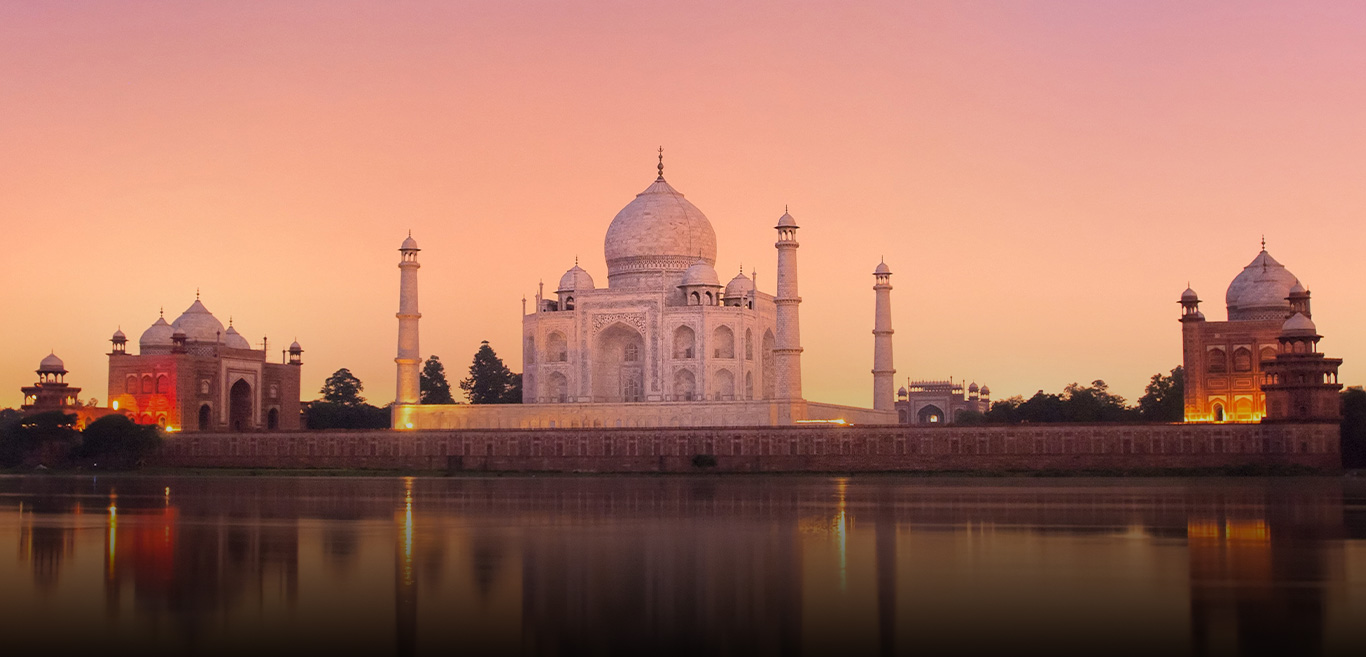
For travellers from all over the globe India’s architectural heritage remains a largely uncharted landscape— an alluring aspect of the country which inspires them to return again to enjoy fresh discoveries of its creative explosions.
The architectural plenitude of India is simultaneously intersected with its boundless artisanal legacy, resulting in a mind-blowing canvas of structure, material, colour and craft and creativity.
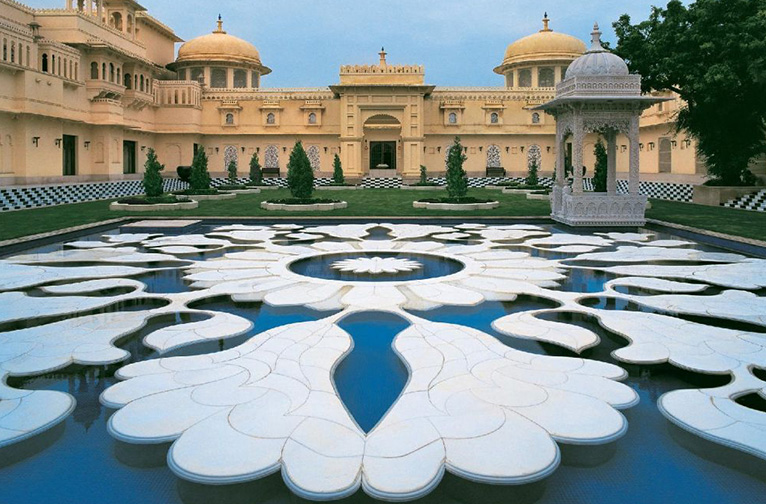
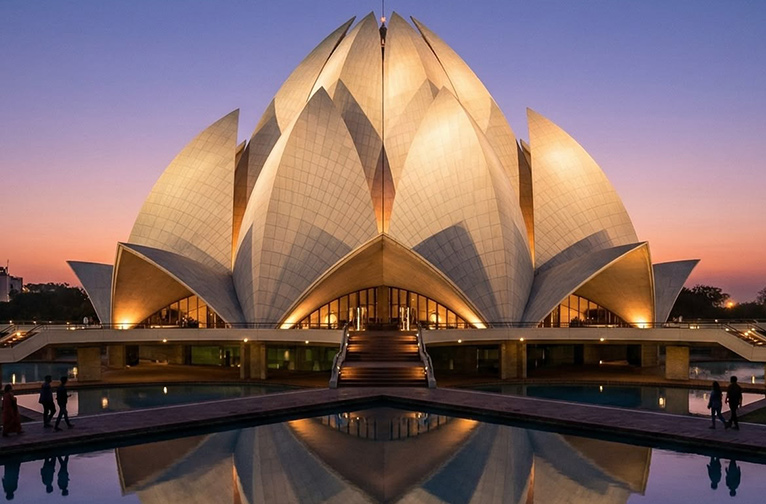
From Jaipur to Ahemedabad… from Gurgaon to Mumbai, Indian architecture is popping up in the most delight giving ways. It’s not just in residential spaces that we are witnessing these evolving narratives— this phenomenon has expanded its reach into the hospitality sector, public structures and even cityscapes.
The influential design capital of Milan in Italy hosted INDX/Global, a platform founded by Disha Shah to showcase India’s creative excellence, design discipline and cultural intelligence, by bringing Indian architects and designers to an international audience. From where she stands the platform aims to be a channel of record, exchange and possibility — one that will continue to champion Indian architecture and design on the global stage.
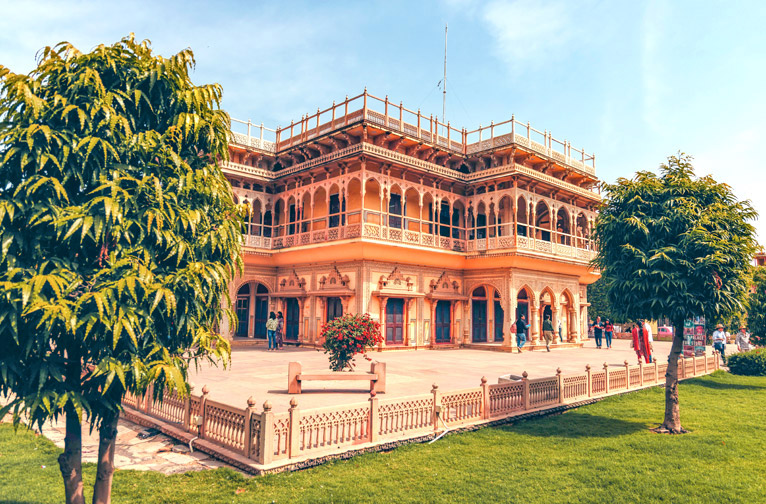
In the year 2027 the erstwhile royal city of Jaipur, a place of immense cultural and historic consequence, will celebrate the 300th anniversary of its founding. If you have occasion to visit Jaipur, a foray into the city palace, a honeycomb of painted and frescoed courtyards, palaces and pavilions is something you shouldn’t miss. Built along the tenets of Vastu Shastra, and fused with elements of Mughal and Rajput architecture the City Palace features two main building complexes— Chandra Mahal and Mubarak Mahal. Chandra Mahal on the western end of the complex holds a commanding position as the tallest and most prominent building in the complex. It is notable for its stucco sculptural decorations, marble inlay and painterly profusion. Located here is double storied Sukh Niwas, the Rang Mahal or Shobha Niwas, remarked for its coloured mirror and tile work, the blue-painted Chhavi Niwas, the Shri Niwas, and Mukut Mandir.
Mubarak Mahal, built by Maharaja Madho Singh II in the late 19th century features architectural lines that are a fusion of the Islamic, Rajput and European architectural styles. It now serves as a museum showcasing the world of the Kachhwaha royals.
Pritam Niwas Chowk or the Inner Courtyard features the four spectacular painted gateways representing the seasons and Hindu deities: Peacock Gate dedicated to Lord Vishnu represents Autumn; the Lotus Gate dedicated to Goddess Parvati represents Summer. Rose Gate dedicated to Goddess Devi represents Winter; the Leheriya Gate dedicated to Lord Ganesha, represents Spring.
The palace complex is a fusion of buildings, pavilions, courtyards, gardens, and temples. The splendid fountain system extending from Chandra Mahal into the Jai Niwas gardens is in the process of being restored to its former glory.
The city palace is strenuously connected to the most prolific rulers who patronised the arts. Maharaja Swi Jai Singh II. The artisans, who were attached to famous Chattis Karkhanas (36 industries) of the early 18th century, have left their indelible stamp of the breadth of their decorative craftsmanship on the palace for eternity.
You can also enjoy a homestay at properties like 28 Kothi and The Johri which bring together minimalist, modern interiors with traditional Rajasthani craftsmanship, textiles, and archways.
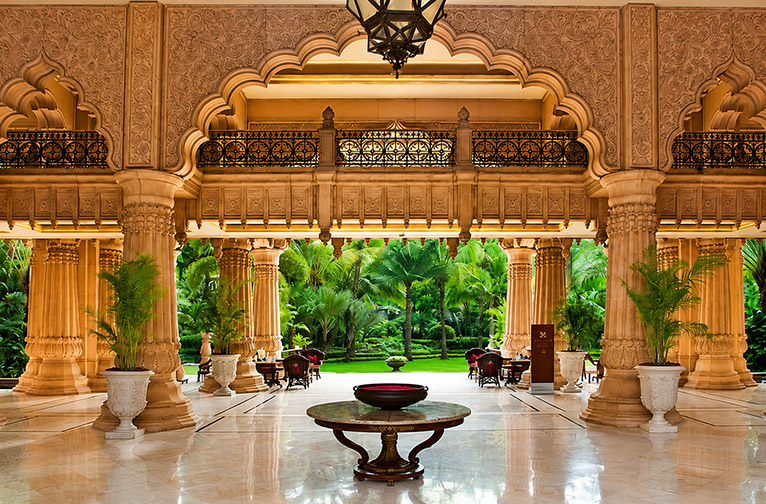
Some of the key elements of traditional Indian architecture are amply represented in the form of jalis or latticed screens used to filter light and air; domes and arches: adopted from Mughal architecture, adding grandeur to buildings; courtyards: for natural ventilation and a communal space for family gatherings; intricate woodwork: showcased in interiors, now being fused with modern materials and techniques to balance the old and new. Contemporary Indian architecture is harking back to traditional Indian architecture’s eco-friendly practices, by using local materials like clay, stone, and timber and blending them with modern designs. They are also adopting rainwater harvesting systems and natural ventilation systems inspired by traditional designs like courtyards and jalis.
A short drive away from Udaipur stands the impressive RAAS Devigarh. The restoration of this fortified 18th-century palace in the Aravalli Hills is a fantastic illustration of how the traditional, modernity and individual talent are brought to bear in a seamless harmony of contemporary luxury. Modern comforts such as a spa, glass-fronted dining areas, and a black marble swimming pool have been organically embedded into the ancient courtyards, terraces, and gardens. The palace has amplified the beauty of locally sourced marble, semi precious stones, and intricate inlay work, as a salute to regional Rajasthani artisanship. The sheer poetry of historic Rajasthani architecture with modern minimalism in one space is supported by stupendous landscaping propelled by the visionary outlook of the famous landscape architect, Aniket Bhagwat. The design,in an attempt to open up a timeless dialogue between nature and architecture, embraces minimalism, local materials, geometric water channels, and native flora
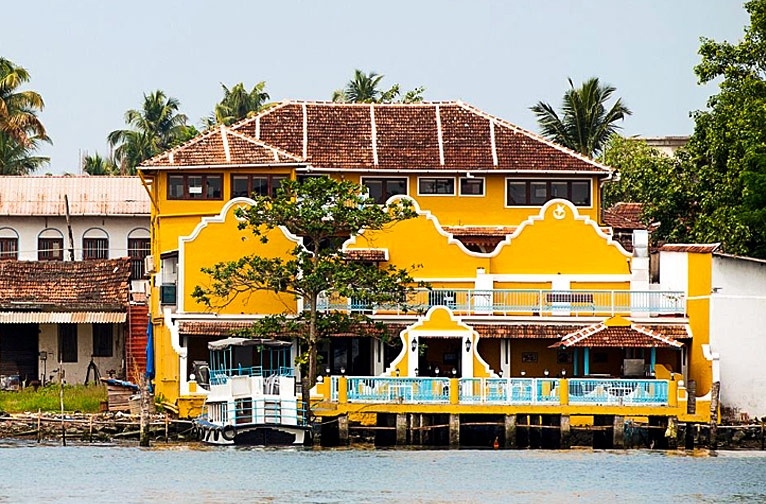
Travelling through Kochi and the Wayanad regions you’ll find opportunities to stay at one of the several boutique eco-resorts in Wayanad and Fort Kochi; these have seamlessly integrated contemporary-style glass-and-steel frameworks with antique Kerala wooden pillars, red-oxide floors, and open-to-sky courtyards. In Kochi you can explore the present day Muziris Contemporary, which has transformed an old pepper warehouse with a low, tiled roof and a pastel exterior into an art gallery in historic Fort Kochi. The gallery still retains the stage with its with red oxide floors from the days it was used as a Kathakali centre. Still retained here are the protruding walls that allow the large-scale art works on display, breathing space.
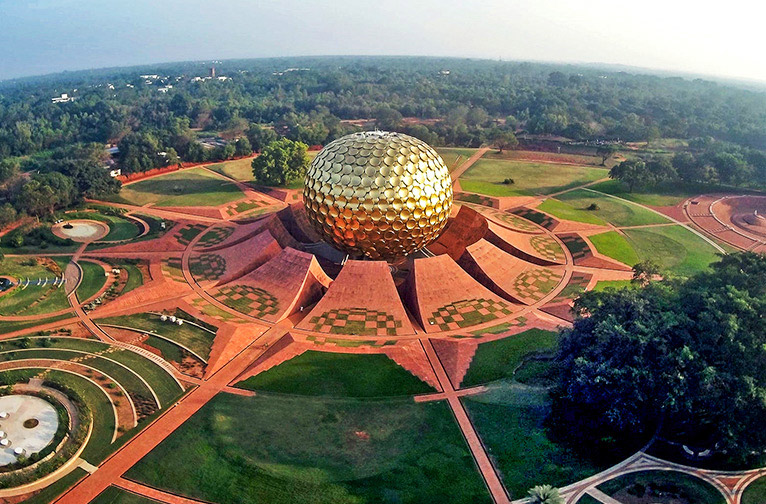
In Auroville, the location of the iconic Matrimandir, you can look for the architectural revolution resulting from experimentations with materials, construction technology, eco-friendly architecture, climate-sensitive designs, and integration with its surrounds.
Architecture has always been a mirror of culture, and a medium of expression reflecting the times and traditions down the centuries. Intrinsic to these imperatives has been the integration of arts and crafts which advances sustainability in environmental terms as well as on a cultural and social scale.